Auto Locksmith Leicester | 24/7 Emergency Car Locksmith Services
Car Key Fob Water Damage Leicester | Repair & Help
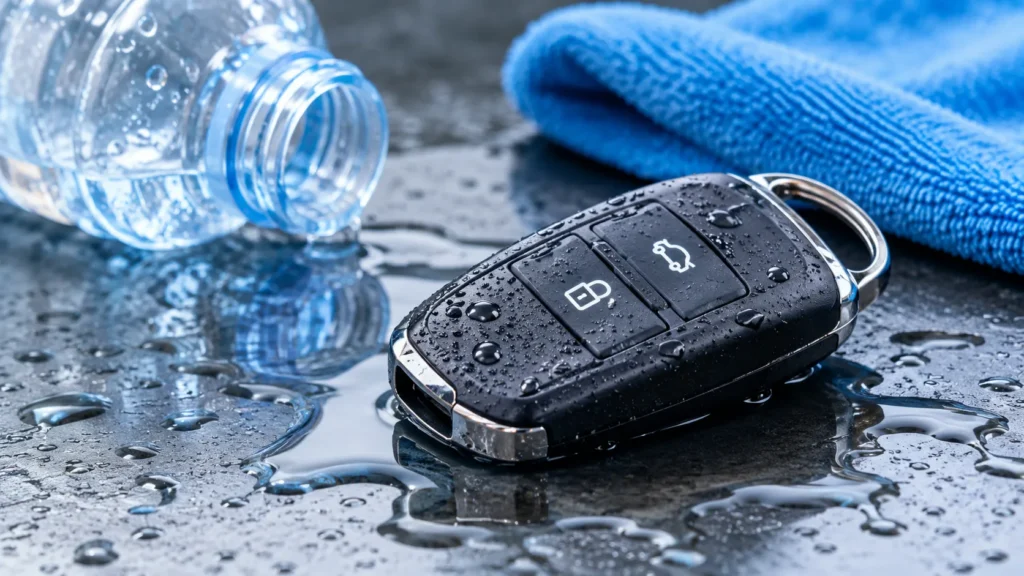
Car key fob water damage is one of the most common problems we see as a mobile auto locksmith in Leicester. A fob goes through the wash, falls in a puddle or gets soaked in a pocket during a downpour, and suddenly the buttons do nothing. The good news is that a water damaged key fob can often be saved, especially if you act quickly and avoid a few popular mistakes.
I am Mohamed Khalid Ali, a dealership-trained mechanic with over 15 years in the motor trade. Here is honest advice on what water does to a fob, what to do first, and when repair makes more sense than replacement.
What Water Does to a Key Fob
A modern fob is a small circuit board, a battery, a radio transmitter and (in most cars) a transponder chip, all inside a plastic shell that is rarely fully waterproof. Water causes problems in a few ways:
- Short circuits: while the battery is connected, moisture can bridge contacts and damage components.
- Corrosion: even after the fob dries, moisture left on the board can corrode the tracks and battery contacts over days or weeks.
- Dead or leaking battery: a wet coin cell can drain quickly or corrode its holder.
- Sticky or unresponsive buttons: the rubber pad and contacts can swell or get residue on them.
Fresh water is usually kinder than salt water, tea, coffee or anything sugary. Washing machine cycles are harsh because of heat, detergent and tumbling, but fobs do sometimes survive. If you want to know more about what is inside, our guide on how modern car keys work and why they are expensive to replace explains the chip and board side.
What to Do Immediately
Whether your key fob was dropped in water or went through the wash, the first hour matters. Work through these steps:
- Get it out and dry the outside. Pat it with a towel or kitchen paper.
- Remove the battery straight away. Open the casing carefully (most have a small slot you can open with a thin flat tool) and take the battery out. This stops current flowing through wet components.
- Separate the parts. If a metal emergency key slides out, remove it. Open the shell fully if you can do so without forcing it.
- Dab away visible moisture. Use a lint-free cloth or cotton bud. If the water was dirty, salty or sugary, gently rinse with a little clean water first and then dab dry, as residue does more harm than water.
- Let it dry naturally. Leave the open parts somewhere warm, dry and airy for at least 24 to 48 hours.
- Fit a fresh battery and test. Do not reuse the wet one.
If you have only one key, do not wait until it fails completely. Our advice in what to do if you lost your only car key is also worth reading if the fob has stopped working altogether.
Myths: Rice and Hairdryers
Two pieces of folklore cause more harm than good.
Rice
Rice is not very effective at drawing moisture out of electronics. It can also leave dust and starch fragments in the casing and around the contacts. Open airflow does a better job.
Hairdryers and heat
Hot air can warp the plastic, damage the board and push moisture deeper into the fob. Radiators, ovens and microwaves are worse. If you want to speed things up, use a cool, gentle airflow at most.
Other things to avoid
- Pressing buttons repeatedly while it is wet.
- Shaking it to “clear” the water.
- Leaving the battery in “to see if it works”.
- Using cleaning sprays or harsh solvents on the board.
Repair or Replace?
A water damaged key fob can be repaired if the board is not badly corroded and the transmitter and chip are intact. Typical repairs include cleaning corrosion, replacing a battery holder, swapping worn button contacts or fitting a new shell with your existing electronics.
Repair usually makes sense when:
- The fob worked normally before it got wet.
- You acted quickly and the water was clean.
- The fob only has intermittent faults, such as some buttons working and others not.
Replacement is more likely when:
- The board shows heavy green or white corrosion.
- Salt water, sugary drinks or a long wash cycle were involved.
- The transponder chip no longer reads, so the car will not start.
Be careful about one thing: a fob that stops unlocking the doors is not always a water problem. Flat batteries and lost sync are common too, and sometimes the fault is in the car rather than the key. As a mechanic, I can diagnose whether it is the key or the vehicle before charging you, so you do not pay for the wrong fix. If replacement is the answer, see our page on car key replacement for how it works, and our guide to replacement car key costs in Leicester for what to expect.
Also check your policy. Some insurers include key cover, which may help if the fob is beyond saving.
Getting a Mobile Fob Repair in Leicester
If your fob still will not work after drying and a new battery, there is no need to take it to a dealership. Leicester Auto Locksmith is fully mobile, so I come to you in Leicester, Wigston, Oadby, Blaby, Beaumont Leys, Braunstone, Glenfield, Birstall, Thurmaston, Evington, Knighton, Aylestone, Highfields and nearby areas. There is no call-out fee.
With dealer-level diagnostic and programming equipment, I can test the fob, repair it where possible, or cut and program a new key on the spot. We cover around 95% of makes and models, and work is carried out at your location, whether that is home, work or the roadside. Emergency help is available 24/7.
You can browse more advice in our key fob guides. If your fob has had a soaking, call Leicester Auto Locksmith for an honest assessment before you spend money on a replacement you may not need.