Auto Locksmith Leicester | 24/7 Emergency Car Locksmith Services
Keyless Car Theft Prevention: 9 Tips for UK Drivers
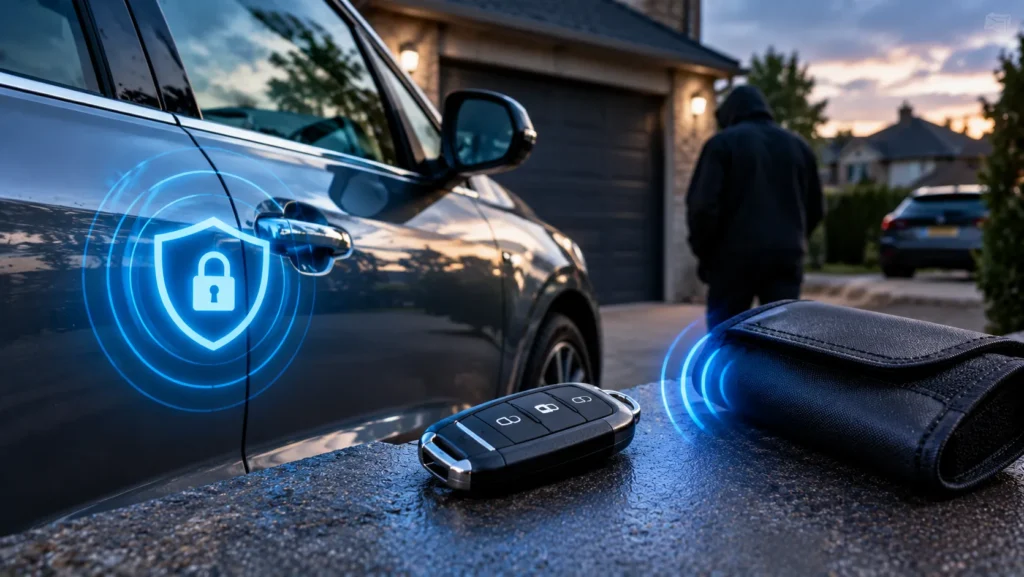
Keyless car theft prevention is something every UK driver with a push-button start car should take seriously. As a dealership-trained mechanic with over 15 years in the motor trade, I have seen what happens when a car simply disappears from a driveway with no broken glass. This guide gives you honest, practical steps without the hype, so you can make your car a harder target.
This article is part of our wider Vehicle Security coverage, where we look at how to keep cars, vans and other vehicles safe across Leicester and the UK.
How Keyless Car Theft Works
Most keyless entry theft uses a relay attack. Your key fob constantly sends out a low-power signal. When it is close to the car, the car unlocks and lets you start the engine. Thieves use two devices. One person stands near your front door or window to pick up the fob signal. The other stands by your car. The signal is passed between them, and the car believes the key is right beside it.
The car can then be unlocked and driven away. Once the engine is running, it often does not check for the key again, which is why a stolen car may be found without its key later.
A second method targets the car itself. Thieves access the diagnostic port or wiring and programme a blank key to the vehicle. This is a different weakness, and it is why immobiliser and security quality matter as much as the fob.
Is Your Car at Risk?
Any car with keyless entry and push-button start can be vulnerable, particularly older systems without newer motion-sensing fobs. Risk goes up if:
- You park on a driveway or street close to your front door.
- You leave keys in the hallway, on a hook or in a bowl near an outside wall.
- Your car has no visible deterrent such as a steering lock.
- Your fob has no sleep mode and always transmits.
Manufacturers have improved newer models, with ultra-wideband technology and fobs that go to sleep when they are still. Check your handbook or ask a specialist about your specific model. If you are unsure, we can check it on-site as part of our immobiliser diagnostics.
Where to Store Your Keys at Home
Answering the common question of where to keep keyless car keys at night: keep them as far from the car and from outside walls as you reasonably can.
- Move keys away from the front door. A bedroom or upstairs room is better than the hallway.
- Avoid window sills and external walls. Signals travel further than people expect.
- Use a signal-blocking box or pouch. Store all fobs, including spares, in it.
- Do not forget the spare. A spare in a drawer is just as exposed as your main fob.
Faraday Pouches, Steering Locks and Other Deterrents
Do Faraday pouches work for car keys?
Yes, a good-quality Faraday pouch can block the fob signal, but quality varies. Test yours: put the fob inside, close it properly, then stand next to the car and try the door handle. If the car unlocks, the pouch is not working. Cheap or worn pouches can fail, and a pouch with a damaged seam or lining should be replaced. We cover the home-made alternative in our article does tin foil block car key signals, which is worth reading before relying on kitchen foil.
Steering locks
A visible steering lock will not stop a determined professional, but it adds time and noise. Many thieves move on to an easier car. It works as one layer, not a complete answer.
Other options
- Park smartly. Use a garage if you have one, or park in a well-lit spot with your car facing the house.
- Add a physical barrier. A driveway bollard or a second vehicle can make removal harder.
- Consider a tracker. A tracker will not prevent theft, but it can help recovery.
- Lock the car manually. Check it has actually locked, and be aware that some thieves jam the lock signal.
Turning Off Keyless Entry or Fob Signal
Many drivers ask whether you can turn off keyless entry on your car. On many models, yes. The method depends on make and year, and some cars have a setting in the menu while others use a button combination on the fob. Common approaches include:
- Checking the infotainment or vehicle settings menu for a keyless entry option.
- Using the fob button sequence given in your handbook to put it into sleep mode.
- Asking a specialist to check whether your car supports disabling proximity entry.
Not every car allows this, and we would not recommend anything that interferes with the immobiliser. If you are unsure, ask before changing settings. Our Key Fob Guides explain more about how different fobs behave.
What to Do If Your Car Is Not Responding to Your Key
Not every unresponsive key is a theft attempt or a fault with the car. Common causes include:
- A flat fob battery. This is the most common cause and an easy fix.
- Signal interference. Phones, metal objects or a pouch can block the signal.
- A damaged fob. Water or impact damage affects the internal circuit.
- A programming or immobiliser fault. The car no longer recognises the key.
Try the spare key first. If the spare works, the original is the problem. If neither works, the fault may be in the car. One of our advantages is that we can diagnose whether it is a car problem or a key problem before charging, so you do not pay for the wrong repair.
If your car has been broken into or you suspect an attempt, report it to the police and contact your insurer. If you have lost a key and are worried someone could use it, we can programme a new key and erase the missing one from the car where the model allows it.
A Simple Nine-Step Checklist
- Keep fobs away from doors and windows.
- Store them in a tested Faraday pouch or box.
- Store spare keys the same way.
- Use a steering lock where you can.
- Park in a garage or well-lit area.
- Check your car has locked.
- Ask whether your fob has a sleep mode.
- Fit a tracker if your car is a common target.
- Have your immobiliser and keys checked if anything seems wrong.
Need Help in Leicester?
Leicester Auto Locksmith is a fully mobile service covering Leicester, Wigston, Oadby, Blaby, Glenfield, Birstall and surrounding areas. We come to you with dealer-level diagnostic and programming equipment, there is no call-out fee, and we are available 24/7. If your key fob is misbehaving or you want to check your security, call us for honest advice.