Auto Locksmith Leicester | 24/7 Emergency Car Locksmith Services
Immobiliser Problems Leicester | Mobile Locksmith
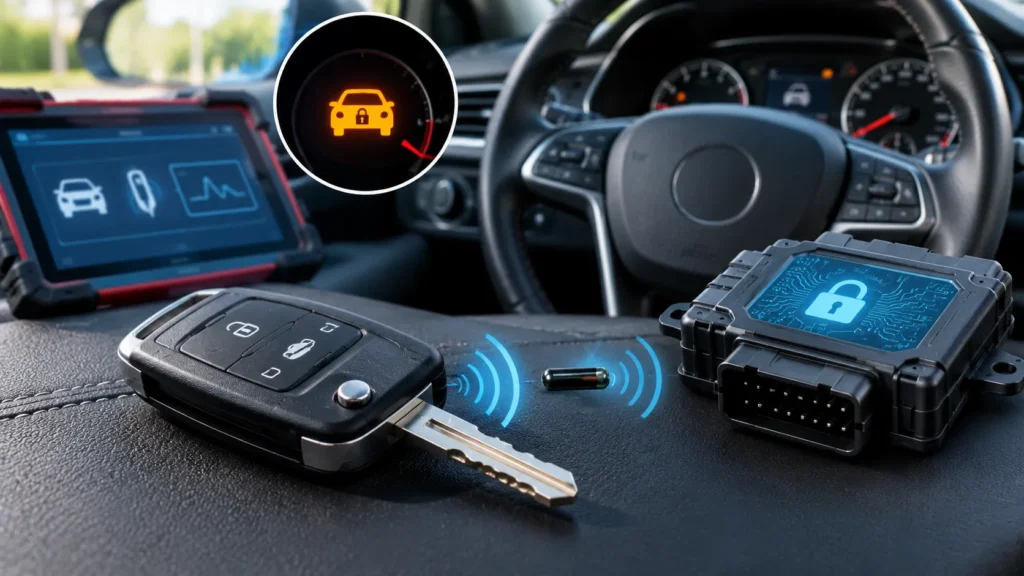
If your car won’t start and a little key or padlock symbol is flashing on the dashboard, you are probably dealing with immobiliser problems. It is stressful, especially when you are stuck at home, work or a supermarket car park. This guide explains what causes immobiliser problems in Leicester, what you can safely try yourself, and how a mobile diagnostic visit finds the real fault before you pay for the wrong repair.
I come from a dealership-trained mechanic background with over 15 years in the motor trade. That matters here, because many cars blamed on the immobiliser actually have a flat key battery, a worn key, a weak car battery or a wiring issue. Getting the diagnosis right saves money.
What an Immobiliser Does
An immobiliser is an anti-theft system fitted to virtually every car built since the late 1990s. Your key or fob contains a transponder chip that sends a coded signal to the car. The engine control unit (ECU) checks that code. If it matches, the engine is allowed to start. If not, the fuel or ignition is cut and the car cranks but won’t run, or does nothing at all.
This is why a simple copy of a key cut at a shop will turn the lock but not start the engine. The chip must be programmed to your car. If you want more background, read our guide on how modern car keys work and why they are expensive to replace.
Signs Your Immobiliser Is Faulty
A car immobiliser fault usually shows itself in a few recognisable ways:
- The immobiliser light flashing rapidly or staying solid when you turn the key.
- The car won’t start, or starts and cuts out after a second or two.
- A message such as “key not recognised” or “immobiliser fault” on the dash.
- The remote locks the doors but the engine refuses to fire.
- Intermittent starting: fine one day, dead the next.
A slowly flashing light when the car is parked and locked is normal. It shows the system is armed. The problem is a fast flash or a light that stays on when you try to start.
Key Problem or Immobiliser Problem?
This is the question that decides the repair. Many people ask why their immobiliser light is flashing and the car won’t start, and the cause is often not the immobiliser itself. Common culprits include:
- Key fob battery: a weak battery can stop the transponder signal being read, especially in keyless cars.
- Damaged transponder chip: keys that have been dropped, soaked or chewed by a dog can lose the chip or crack it.
- Worn key or ignition barrel: the key may not sit properly, so the reader gets a poor signal.
- Weak car battery: low voltage causes all sorts of false warning lights, including the immobiliser symbol.
- Faulty aerial ring or reader coil: the part around the ignition that reads the chip.
- ECU or wiring faults: less common, but they do happen, particularly after electrical repairs or water ingress.
If you have a spare key, try it. If the spare starts the car, the original key is the issue. If neither works, the fault is more likely in the car. That single test narrows things down enormously.
Safe Things to Try Before Calling a Locksmith
Before you call anyone, there are a few harmless checks:
- Try your spare key. Keep it away from the first key, as two chips close together can confuse the reader.
- Replace the fob battery. Most use a common coin cell and it takes a couple of minutes.
- Check the car battery. Dim interior lights or slow cranking point to a weak battery.
- Remove heavy keyrings. Extra keys, fobs and metal tags can interfere with the signal.
- Lock and unlock the car with the remote, then try again. Some cars resync this way.
- Leave it a few minutes with the ignition off, then retry. This can clear a temporary glitch.
You may see advice online on how to reset a car immobiliser. Procedures vary by make and model, and some involve repeated key turns or holding the ignition on for a set time. These only work for certain vehicles and a temporary fault. If your handbook describes a reset, it is fine to follow it. Do not disconnect wiring, pull fuses at random or force the ignition, as that can turn a small issue into an expensive one. If your fob battery is the suspect, our article on starting a car when the key fob battery dies is worth a read.
How Mobile Immobiliser Diagnostics Work
Mobile immobiliser diagnostics means the testing happens where your car is parked, whether that is Wigston, Oadby, Braunstone, Beaumont Leys or the city centre. There is no call-out fee and no need to have the car towed to a garage.
A typical visit goes like this:
- Talk through the symptoms. When did it start, what lights show, has anything been repaired recently?
- Test the keys. Dealer-level equipment reads whether the transponder chip is alive and correctly coded.
- Check the battery and basics. Rule out voltage problems first.
- Read fault codes. Plugging into the diagnostic port shows whether the immobiliser, ECU or reader coil is reporting an issue.
- Explain the findings. You are told what is wrong, what it will cost, and whether it is even a locksmith job before any work begins.
Because I can separate key problems from wider car faults, I will tell you honestly if the real issue needs a garage, such as a failed starter or fuel problem, rather than selling you a key you do not need. Our equipment covers roughly 95% of makes and models.
When Reprogramming or Key Replacement Is Needed
Once the fault is confirmed, the fix usually falls into one of these routes:
- New fob battery or cleaned contacts: the cheapest outcome, and a common one.
- Key reprogramming: if the key has lost its sync with the car, it can often be recoded on site.
- New key cut and programmed: if the transponder is dead or the key is damaged, a replacement is made and coded to your vehicle.
- Adding a spare key: worth doing while the car is being worked on, since having only one key makes any future problem harder.
- Reader coil or ignition barrel replacement: where the fault is in the car rather than the key.
For a full look at coding, see our car key programming resources. If you want to understand wider protection for your vehicle, browse our vehicle security guides too.
Get Honest Help With Immobiliser Problems in Leicester
An immobiliser fault is rarely as bad as it first looks, but guessing at the cause can get expensive. Try the safe checks above, and if the car still won’t start, call Leicester Auto Locksmith. We come to you 24/7 across Leicester and surrounding areas, diagnose first, explain clearly and only charge for work you actually need.